The 2026 UK CBD Buyer's Reality Check: What to Inspect Before You Pay
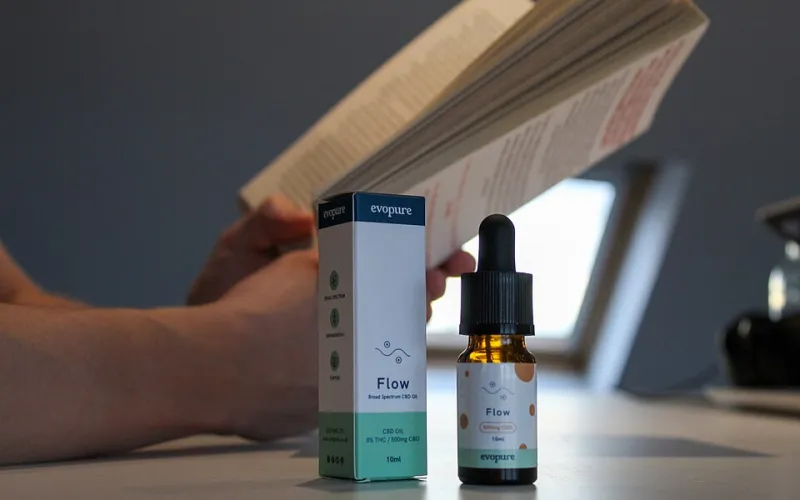
Photo: Evopure, CC BY-SA 2.0, via Wikimedia Commons
Walk into any UK health shop in 2026 and you will see the same words on repeat: premium, organic, pharmaceutical-grade, lab-tested. Some of those products are decent. Some are expensive bottles of hemp seed oil with a nice font. The difference is rarely visible on the front of the pack, which is why the back of the pack — and the batch paperwork — is where the real shopping happens.
This is not a guide to finding the 'best' CBD product, because that depends on what you want it for. It is a checklist for judging whether a product is honest, legal and worth the money. Treat the packaging as a claim, not proof.
The label is marketing; the batch is evidence
A certificate of analysis, or COA, is a lab report showing what is actually in a batch. The key word is batch. A generic PDF on a brand's homepage is close to useless if it does not match the batch number printed on your bottle. A proper COA should name the product, the batch, the lab that tested it and the date. It should show a cannabinoid profile — CBD, THC and any minor cannabinoids — and, ideally, tests for pesticides, heavy metals, solvents and microbial contamination.
If the QR code takes you to a homepage rather than a specific report, that is a yellow flag. If the brand cannot send you a batch-specific COA on request, make it a red one. Plenty of legitimate small brands will email one happily. The ones that get defensive are telling you something.
The THC line is a ceiling, not a selling point
The often-quoted UK limit is no more than 1mg of THC per container. That is a legal ceiling, not a target. A credible COA should show the measured THC figure, not just a vague 'THC-free' claim. Products that boast about being 'strong' while being fuzzy on THC are not the ones to gamble on. If you take medication, are pregnant or breastfeeding, or have liver concerns, speak to a pharmacist or GP before using any CBD product.
Novel food status: the bit most shoppers skip
CBD extracts are treated as novel foods in the UK. The Food Standards Agency maintains a public list of products for which applications have been validated. Being on that list is not the same as final authorisation, but a product with no listing at all deserves hard questions. Ask the brand whether the specific product is covered, not just the company name. This is dull admin, but it is exactly the kind of dull admin that separates a serious operator from a drop-shipper.
Do the dose maths before you compare prices
CBD pricing is designed to confuse. One bottle says 500mg, another says 10%. They may be completely different products. Work out the cost per 10mg of CBD, then compare. Check whether the label states mg per ml and, ideally, mg per drop. A 10ml bottle with 1,000mg is 100mg per ml; if a drop is 0.05ml, that is about 5mg per drop. If the brand cannot explain its own dosing, walk away.
Also check whether the number refers to total CBD or total cannabinoids. Full-spectrum, broad-spectrum and isolate are different products with different profiles. None is automatically better. Full-spectrum contains trace cannabinoids and potentially THC; broad-spectrum removes THC; isolate is purified CBD. The right choice depends on your preference, your sensitivity and the lab report.
The shopper's checklist
- Batch-specific COA that matches the bottle in your hand.
- Third-party lab, not an in-house 'quality team'.
- Cannabinoid profile that matches the label claims.
- Measured THC figure within the UK limit.
- Contaminant panel: pesticides, heavy metals, solvents, microbes.
- Novel food listing for the product, not just the brand.
- Clear mg per ml and mg per drop or capsule.
- Carrier oil and ingredients listed plainly — MCT, hemp seed oil, olive oil, flavourings.
- Extraction method stated, but not treated as a magic badge. CO2 and ethanol can both produce good products.
- Batch number, expiry date and storage advice.
- A real UK contact address or responsible person.
- A returns policy that does not feel like a trap.
- Price per mg, not price per pretty bottle.
Oils, capsules and topicals: what matters in each
With oils, the dropper is part of the product. A poorly marked dropper makes accurate dosing a guessing game. Amber glass helps protect cannabinoids from light, but it is not proof of quality. With capsules, consistency is king: check the CBD dose per capsule and watch for unnecessary fillers. With topicals, manage expectations. A balm may feel soothing on a sore shoulder, but it is not a stealth sleep aid. Check for menthol, capsaicin or essential oils if you have sensitive skin.
Gummies are fine if the dose is uniform and the sugar content is not a surprise. Vaping CBD is not something we would recommend as a first choice given the wider questions about vaping. And ignore 'water-soluble' claims unless the lab report and ingredients actually back them up.
What actually matters, in our opinion
Three things separate a trustworthy product from a pretty one: a batch-specific COA, an honest dose, and verifiable UK novel food status. Everything else is secondary. Organic certification is nice. Fancy extraction stories are nice. Terpene claims are nice. But if the lab report is generic and the dose is vague, none of it means much.
Our advice is simple: ask for the COA before you buy. Compare price per mg. Start low. Keep a note of how you feel. And if a brand makes medical claims or promises miracle results, close the tab. In the UK, CBD is not a licensed medicine, and the best brands do not pretend otherwise.