What Survives a Bike Ride, a Shared Fridge and a Hot Desk Drawer? Four CBD Formats Under Real-Life Conditions
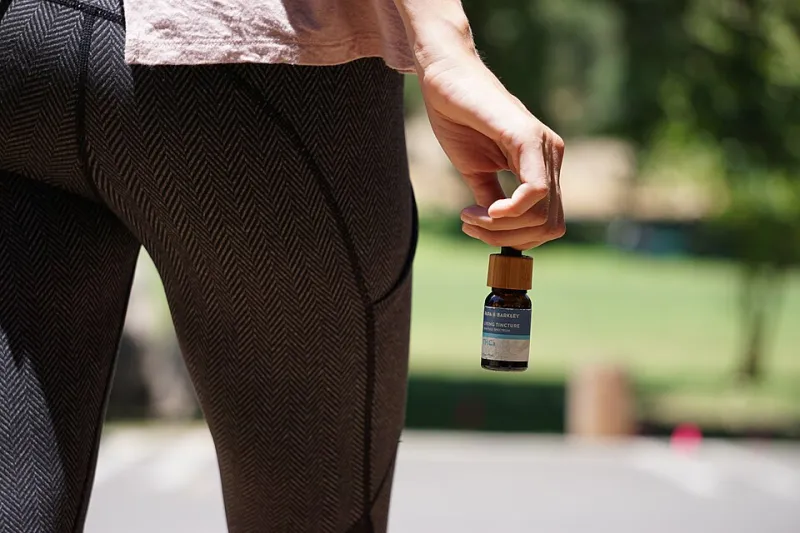
Photo: elsaolofsson, CC BY 2.0, via Wikimedia Commons
Most CBD content is written in ideal conditions. Good light, a clean surface, a quiet ten minutes and nobody asking where the milk went. Your average Tuesday is not that. Your Tuesday is a 7:40 train, a drizzle-soaked bike ride, a shared kitchen with one working kettle and a desk drawer that becomes a greenhouse the moment the sun clears the building opposite.
So instead of comparing milligrams on a spreadsheet, let us compare formats against the things that genuinely happen to a small bottle in a bag.
The test conditions
Four everyday pressures do most of the damage:
- Temperature swings. A radiator-adjacent drawer, a cold bike ride, a car left in a station car park all day.
- Discretion. Can you use it at your desk, or in front of a colleague who will ask questions you do not want to answer at 9:15am?
- Dosing consistency. Can you repeat the same amount without thinking hard?
- Label clarity. Can you tell, in five seconds, what is in it, how much CBD is per dose, and what the batch number is?
That is the whole test. Nothing exotic.
CBD oil: excellent, if you can live with a dropper
Oil is the format most people start with, and for good reason: it is easy to adjust a dose in small steps, it is absorbed reasonably predictably under the tongue, and a decent bottle gives you a clear milligram figure per ml.
Against real life, though, oil has two weaknesses. First, a dropper is a small public performance. Doing it at a shared desk is fine if you are relaxed about it and awkward if you are not. Second, oil is fussy about heat and light. A dark glass bottle in a warm drawer is not a catastrophe, but it is not what the manufacturer intended either. Keep it out of direct sun, away from the radiator, and check the label for storage instructions before you assume it can live in the car.
Best for: people with a fixed routine at home, or anyone who wants fine control over dose size.
Capsules: the quiet achiever
Capsules win the discretion test outright. No dropper, no taste, no explaining. A pot of capsules in a drawer looks like any other supplement, which is either reassuring or mildly depressing depending on your view of office life.
They are also the most consistent format for most people. Each capsule contains a stated amount, so repeat dosing is straightforward and the guessing disappears. The trade-off is flexibility: if you want to nudge a dose up or down, you are working in whole-capsule steps.
Storage is more forgiving than oil, but check the label anyway. Some capsules want cool, dry conditions, and a drawer above a radiator is neither. A shared kitchen fridge is not automatically a better home either, given that it is also where everyone's questionable leftovers live.
Best for: commuters, shared desks, and anyone who knows they will not reliably use a dropper on a busy day.
Balms and topicals: the desk-drawer survivor
If the question is purely "which format copes best with being forgotten in a drawer", balms win. They are not dosed the same way as an ingestible, they are usually in a tube or tin, and they do not need the same precision.
Be clear about what they are for. A balm is a topical product for a specific area, not a substitute for an oil or capsule, and the labelling should tell you how much CBD is in the tube and what else is in the base. Fragrance-heavy balms in a shared office are worth a second thought, mainly for the sake of the person at the next desk.
Best for: people who want something in a bag that does not mind being in a bag.
Drinks and shots: convenient, fragile, easy to overdo
Ready-to-drink CBD options are the most pleasant format and the least robust. Cans and bottles are bulky, they take up bag space, and they do not love being warm. Some also contain sugar or caffeine you did not plan for at 4pm.
They are also the easiest format to consume absent-mindedly. A drink goes down quickly and there is no dropper to slow you down. If you are new to CBD, that is a genuine reason to be cautious rather than a reason to avoid the category entirely.
Best for: occasional use, or when you know you will be somewhere with a fridge and a bin.
Label clarity: the bit everyone skips
None of the above matters if you cannot read the label. Before you buy, look for:
- A clear milligram figure for CBD, not just a bottle size.
- The batch number and a way to check it.
- A full ingredient list, including any carrier oil, flavourings or sweeteners.
- A statement that it is a food supplement, not a medicine.
- Confirmation the product appears on the FSA novel foods register — a useful baseline for UK shopping in 2026.
If a label is vague about how much CBD is actually in a dose, the format has already failed the test regardless of how nice the bottle looks.
So which one survives?
Balms survive the drawer. Capsules survive the commute. Oil survives if you have a routine and a cool cupboard. Drinks survive about as long as your willpower near the office biscuit tin.
There is no single winner, because the honest answer is that the best format is the one you will use consistently and dose carefully. Everything else is packaging.
A quick note: CBD is not suitable for anyone under 18, and it is worth speaking to a pharmacist or GP before starting if you are pregnant, breastfeeding, or taking any medication. CBD is a food supplement, not a treatment for any condition.