The Supporting Cast in Your CBD Bottle: Carrier Oils, Flavours and the Quiet Extras
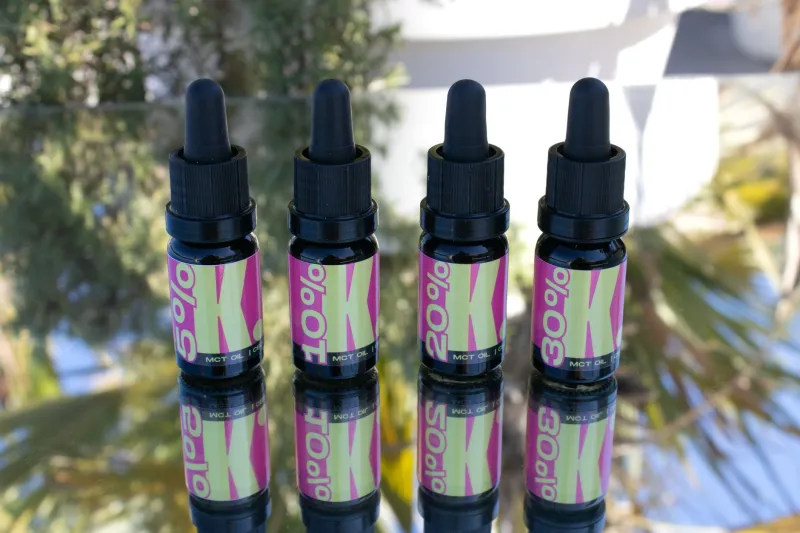
Pick up any CBD oil in a UK shop or online and your eye lands on the same number: 500mg, 1,000mg, 2,000mg. Fair enough. It's the figure everyone compares. But turn the bottle around and you'll find a much longer list — and almost all of it is not CBD. A typical 10ml dropper might contain 10% CBD at most; the other 90-odd per cent is carrier oil, flavour, antioxidants and whatever else the maker has decided to include. That supporting cast doesn't just fill space. It changes how the oil tastes, how it feels in your mouth, how long it keeps and whether you'll actually stick with it.
The milligram gets the attention — the rest gets the bottle
There's nothing wrong with checking the CBD content. It's the active bit, and you should know how much you're getting per ml and per drop. But a product with a sensible milligram figure and a carrier oil you dislike, or an extra that doesn't agree with you, is a false economy. You'll either force it down or leave it at the back of the cupboard. So it's worth giving the ingredients list the same ten seconds you give the front label.
Carrier oils: the quiet workhorse
In UK CBD drops, the carrier is usually MCT oil — fractionated coconut oil, to give it its full name. It's thin, mild and fairly neutral, which is why it turns up in so many tinctures. Hemp seed oil is the other common choice: nutty, green and pleasant if you like the taste, though it's worth remembering that hemp seed oil comes from the seeds, not the flowers, so it doesn't bring its own cannabinoids. Some brands use olive oil, which feels more traditional and can taste robust, or sunflower oil, which is cheap and almost invisible flavour-wise.
Why does this matter? Texture and taste, mainly. MCT feels light on the tongue; olive oil can be heavier and more savoury. If you're counting calories, oils add a small amount, though a 1ml dose is not going to rewrite your day. If you have a coconut allergy, check for MCT — it's usually flagged in bold under UK allergen rules, but it's easy to miss when you're scanning for the milligram number.
Flavours, sweeteners and the quest for a pleasant drop
CBD on its own tastes earthy, slightly bitter and a bit like a garden centre. Most brands add something to take the edge off. That might be natural peppermint or lemon oil, a broad "natural flavouring", or a sweetener such as stevia or erythritol. Some use a little alcohol as a carrier for the flavour.
None of this is automatically a problem. But "natural flavouring" is an umbrella term — it tells you the source is natural, not exactly what it is. If you're sensitive to mint, or you'd rather avoid sweeteners, the small print is where you find out. A flavoured drop that you actually enjoy is more useful than a pure one you dread, so don't treat flavour as frivolous. Just treat it as information.
Terpenes and minor cannabinoids: supporting cast or marketing?
You'll see "full spectrum", "broad spectrum" and "isolate" on labels, and they're really a description of what else is in the bottle alongside CBD. Full spectrum means the extract retains other cannabinoids and terpenes from the hemp plant, including trace amounts of THC. Broad spectrum usually means those have been removed or reduced. Isolate is CBD and little else.
Some producers add terpenes back in for aroma and flavour. That's fine, but it's not a magic ingredient, and the amount is usually tiny. The more practical question is whether you want a product that tastes of hemp's natural companions or one that's been stripped back and flavoured. Neither is better for everyone. It's a preference, and the label should let you work out which one you're buying.
The small-print extras that matter
Look past the carrier and you'll often find tocopherols — vitamin E, essentially, used to stop the oil going off. That's a good sign in a product with a short shelf life. Water-soluble drops may contain glycerin and emulsifiers so the CBD can mix with water; if you avoid certain additives, that's where they'll show up. Preservatives are less common in oil-based drops but can appear in flavoured or water-based formats.
In the UK, allergens must be emphasised in the ingredients list, so coconut, nuts or gluten-containing ingredients should stand out. If a label is vague about what's actually in the bottle, that's your cue to look for a brand that's more forthcoming.
A five-minute label routine
First, find the CBD per ml and per drop, not just the total in the bottle. Second, read the first ingredient — that's the carrier, and it's most of what you're buying. Third, scan the allergens and anything you'd rather avoid. Fourth, check whether the label says "hemp extract" or "CBD isolate" if that matters to you. Fifth, look for a batch number or a lab report; in 2026, a brand that can't tell you what's in the bottle is a brand to leave on the shelf.
What this means for your everyday routine
If you take your drops before work, a neutral MCT oil is easy to get on with. If you use them in the evening, a flavoured drop might feel more like a ritual than a chore. If you're on regular medication, check the full ingredients list with a pharmacist rather than relying on the front of the bottle — CBD can interact with some prescriptions, and the carrier and flavourings are part of the picture. And remember that CBD products in the UK are sold as food supplements, not medicines; they're not licensed to treat anything.
The milligram still matters. But it's the headline act, not the whole show. The other 99% is what you'll taste, swallow and live with — so give it a second look before you pay.