Where Was Your CBD Actually Born? Tracing a Bottle From Field to Fill
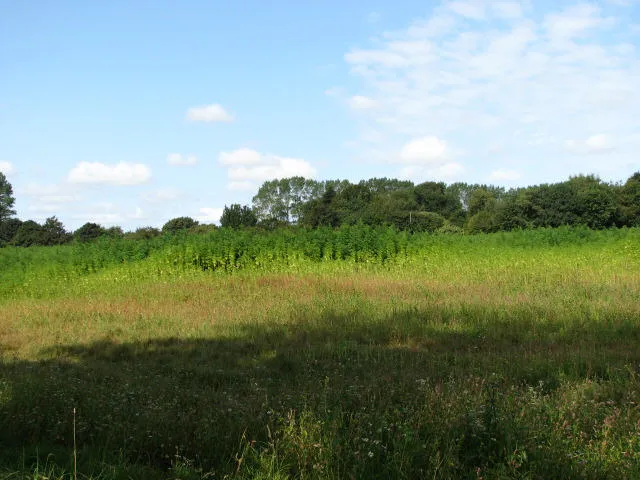
Photo: Evelyn Simak, CC BY-SA 2.0, via Wikimedia Commons
Walk down any UK high street in late 2026 and you'll spot the phrase. It's on the front of the box, usually in a font slightly larger than the one used for the actual milligram amount. Made in the UK. Sometimes it's UK-sourced. Occasionally it's British hemp. All three sound reassuring, and all three can mean wildly different things depending on who printed them.
This isn't a conspiracy. It's just that "made here" has no single legal meaning on a CBD bottle, and the gap between the strongest and weakest interpretation is where your money quietly goes.
Four very different claims hiding under one phrase
When a brand says its CBD is British, it might mean any of the following — and often only the last one.
Grown here. The hemp was cultivated in UK soil, by a named farm, in a known harvest year. This is the strongest claim and the rarest. UK hemp growing exists, but it's small-scale, seasonal, and a lot of it goes into fibre and seed rather than extract.
Extracted here. The plant material arrived from somewhere else, but the extraction and refinement happened in a UK facility. That's a genuine claim about process and quality control, even if the field was in Eastern Europe.
Filled and packed here. The oil arrived as a bulk extract, and a UK contract manufacturer did the blending, bottling, labelling and sealing. Perfectly legitimate — and by far the most common use of the phrase.
Rebranded here. The finished product came in ready to sell, and a UK company put its name on it. Nothing wrong with that either, but it isn't manufacturing, and it shouldn't come with a manufacturing premium.
None of these are dishonest on their own. The problem starts when a bottle that was rebranded in a Manchester office is marketed with the same language — and the same price tag — as one grown, extracted and filled in Britain.
Why the distinction shows up in the price
A genuinely UK-grown, UK-extracted product carries real costs: small harvest volumes, testing, compliance paperwork, and a supply chain that can't lean on cheap bulk imports. A rebadged import avoids nearly all of it.
That doesn't automatically make the expensive bottle better. It does mean you should be able to point at what you're paying extra for. If the answer is a Union flag and a nice bit of serif typography, that's not provenance — that's branding.
Six questions that separate the claims
You don't need to interrogate anyone. A decent retailer will have most of this on the product page or in a saved reply.
- Where was the hemp grown? Country and, ideally, harvest year.
- Where was it extracted? Facility name or at least country.
- Who filled and labelled the bottle? A UK contract manufacturer is a fine answer.
- Is the brand the manufacturer, or the seller? Both are valid; only one justifies a premium.
- Can you send me the certificate of analysis for this batch? Not a COA — this batch.
- Which lab ran it? A named laboratory is much harder to fake than a generic PDF.
If two or three of those get vague, non-committal answers, treat the provenance claim as decoration.
The batch code is the bit that actually works
Every serious CBD product has a batch or lot number somewhere on the bottle — often stamped near the base, sometimes printed on the side of the label. That code is your anchor. It should match the code on the certificate of analysis exactly.
When you open that COA, look for four things:
- A named, traceable lab. UKAS-accredited or ISO 17025 is the reassuring phrase. An unnamed "independent laboratory" tells you very little.
- A test date that sits sensibly against the batch and the best-before date. A COA from three years ago attached to a bottle bought this month is not a match.
- A full cannabinoid panel, not just a headline CBD figure. You want to see CBD, CBDa, THC and the minor cannabinoids, and the numbers should roughly add up to the stated strength when you account for the bottle size.
- A contaminants screen — heavy metals, pesticides, residual solvents, microbials. This is the part that separates a proper lab report from a marketing PDF with a graph on it.
One more thing worth knowing: a COA proves what was in the sample that was tested. It doesn't prove the liquid in your hand is identical. That's why batch matching matters more than brand reputation.
The clue most shoppers miss
In the UK, CBD extract sold as a food supplement is expected to sit within the Food Standards Agency's novel food framework. That means there should be an authorisation application linked to the product, and the applicant name is usually public.
So check it. If the brand on the bottle doesn't appear anywhere in that process, and can't tell you who does hold the authorisation for the extract they're using, that's a provenance question worth asking before you pay premium prices.
A short pre-purchase checklist
- Country of hemp origin stated, not implied
- Extraction location named
- Batch code on the bottle matches the COA
- COA is recent, specific and from a named lab
- Contaminants panel included
- Novel food status clear
- The premium has an explanation that isn't a flag
Buying British is a perfectly good instinct. Just make sure you know which kind of British you're buying — the field, the factory, or the label.